
How Cannabis Vape Pens Work: From Battery to Vapor

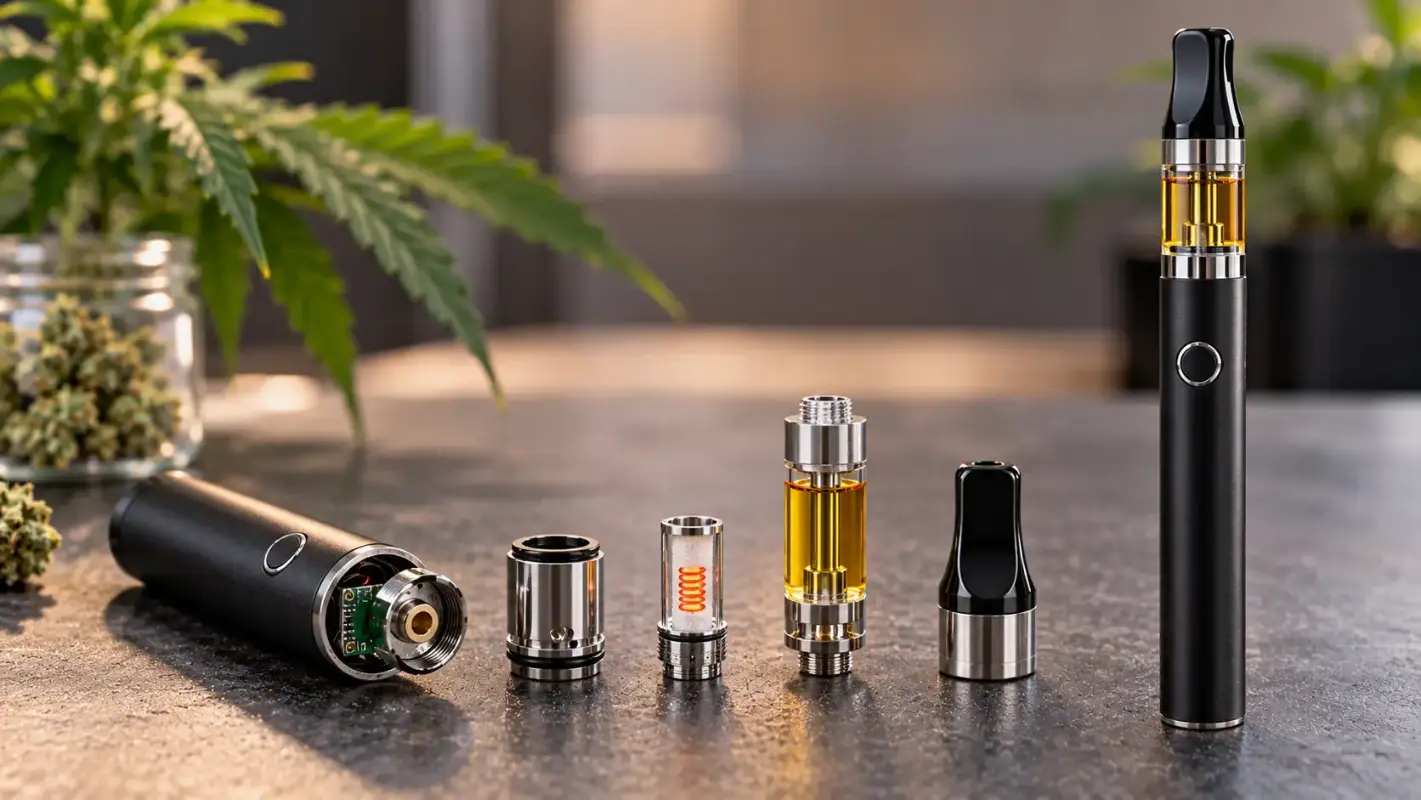
A cannabis vape pen works by heating cannabis material with a battery-powered heating element. The heat creates an aerosol that moves through the device and exits through the mouthpiece. Most cannabis vape pens use a battery, heating element, cartridge or pod, airflow path, and activation system.
The design can vary between devices. Some use a removable cannabis cartridge and a separate vape battery. Others combine the battery, cartridge, and mouthpiece in one unit. Pod-based systems use their own compatible pods and connections.
Understanding each part makes the process easier to follow. In this article, we’ll explain how a cannabis vape works from battery power to aerosol. We’ll also cover the main device types, performance factors, common problems, and basic safety considerations.
The Main Parts of a Cannabis Vape Pen
A cannabis vape pen contains several parts that work together. Each component has a specific role in the heating and airflow process. While designs vary, most devices rely on the same basic functions and can differ in quality and design across trusted brands.
Battery
The battery supplies the electrical energy needed to operate the device. Many rechargeable cannabis vape pens use lithium-ion batteries because they can provide power in a compact form.
Battery capacity affects how long a rechargeable device can operate between charges. Some devices also regulate their power output through built-in circuitry. The battery itself does not create the aerosol. Instead, it supplies the energy required by the heating system.
Heating Element / Coil
The heating element converts electrical energy into heat. Many cannabis vape pens use a coil inside an atomizer or cartridge. Other devices may use ceramic heating elements. The heating element transfers heat to the cannabis oil or other cannabis material. Its resistance can affect the amount of power needed for heating. Some devices also regulate voltage, wattage, or temperature.
Cartridge or Pod
The cartridge or pod holds the cannabis oil or extract used by the device. It also connects the cannabis material with the heating system. A cartridge may use a 510 thread or another connector. Pod-based devices often use proprietary connections instead. Compatibility therefore depends on the specific device and cartridge design.
Airflow Path
The airflow path carries air through the device during a draw. Airflow vents allow air to enter and move toward the heated area. The moving air then carries the generated aerosol through the vapor path. Restricted airflow can increase draw resistance and affect vapor production.
Mouthpiece
The mouthpiece provides the outlet for the aerosol. It connects the internal vapor path to the outside of the device. Different cannabis vape pens can use different mouthpiece shapes and designs. However, the basic function stays the same. The mouthpiece provides the final path for the aerosol leaving the device.
Activation System
The activation system controls when the heating process begins. Some vape pens use an activation button, while others use draw-activation. A button-activated device starts when you press its button. A draw-activated device uses a sensor to detect airflow. The device then signals its circuitry to send battery power to the heating element.
How the Battery Powers the Heating Element
The battery starts the heating process inside a cannabis vape pen. When the device activates, electrical energy travels through its internal circuit. That power reaches the heating element, which converts electrical energy into heat.
This process relies on electrical resistance. As current moves through the coil, the coil heats up. The heating element then transfers that heat to the cannabis material inside the cartridge or chamber. Health Canada describes this basic design as a battery powering a heating element that heats the vaping substance and produces an aerosol.
The Battery-to-Heat Process
| Stage | What happens |
|---|---|
| 1. Activation | The button or sensor activates the device. |
| 2. Electrical flow | Battery power enters the electrical circuit. |
| 3. Power delivery | The circuit sends power to the heating element. |
| 4. Heat generation | Electrical resistance causes the element to heat. |
| 5. Heat transfer | Heat reaches the cannabis material. |
| 6. Aerosol formation | Heated material produces an aerosol. |
The amount of power can depend on the device. Some vape batteries use a fixed power output. Others offer variable voltage or temperature control.
Research on cannabis extract vaporization systems also shows why these settings matter. One study measured coil temperatures across temperature-controlled and voltage-controlled devices. The researchers found that voltage alone did not reliably predict coil temperature.
That means two devices can use similar batteries and cartridges but behave differently. Their circuitry, resistance, voltage, and heating technology can all affect the heating process. This is one reason device specifications matter when considering how a cannabis vape pen works.
How Cannabis Oil Turns Into an Inhalable Aerosol
After the heating system reaches its operating conditions, heat transfers into the cannabis oil or extract. The added thermal energy causes compounds within the material to enter the aerosol produced by the device.
The process can therefore be viewed from the material side:
| Stage | What happens |
|---|---|
| 1. Heat transfer | Thermal energy reaches the cannabis oil or extract. |
| 2. Compound release | Heat causes compounds within the material to enter the aerosol. |
| 3. Aerosol formation | The heated material becomes part of the aerosol. |
| 4. Airflow | Air carries the aerosol through the device toward the mouthpiece. |
The resulting aerosol depends on factors such as the heating system, operating conditions, and cannabis formulation.
The same principles of controlled heating also apply to other cannabis concentrates. For a closer look at how concentrates are heated and used, see our guide How to Dab Concentrates for Beginners.
Vaporization vs. Combustion
Vaporization and combustion both involve heat, but they are different processes. A cannabis vape pen heats cannabis oil or extract to produce an aerosol without intentionally burning the material. Combustion, by contrast, involves burning cannabis material and produces smoke.
This difference is important when understanding how a cannabis vape pen works. The device is designed to deliver controlled heat to the cannabis material rather than ignite it. The heating element transfers thermal energy to the oil or extract, allowing compounds within the material to enter the aerosol.
The term vapor is commonly used when discussing vape pens. However, the output is more accurately described as an aerosol, because it consists of fine particles or droplets suspended in air rather than simply water vapor.
In simple terms, vaporization uses controlled heating to produce an aerosol, while combustion uses burning to produce smoke.
What’s Inside a Cannabis Vape Cartridge?
A cannabis vape cartridge primarily contains cannabis extract within a sealed reservoir. Its internal construction allows the extract to reach the heating system while maintaining the device's airflow path.
The extract itself can vary considerably. Common formulations include distillate, resin, and live resin. These materials can differ in viscosity, composition, and how they behave within the cartridge.
Cannabis Oil and Extract
The type of extract can affect cartridge characteristics. For example, oil viscosity influences how readily the material moves toward the heating area. The extract can also contain terpenes, which contribute to its overall composition.
Temperature can also affect viscosity. This helps explain why cartridge performance can change under different conditions.
Cartridge Compatibility
Cartridge compatibility depends on more than the physical connection. A cartridge and battery also need compatible electrical specifications. Some cartridges use the widely recognized 510 thread. Others use proprietary connections designed for a specific device.
Before pairing components, check the manufacturer's compatibility information. This helps avoid using hardware that was not designed to work together.
How Different Cannabis Vape Pens Work
Cannabis vape pens use several hardware configurations. Their main differences involve how the battery, cannabis material, and heating system are integrated.
The table below shows how the most common configurations differ.
| Vape Type | Main Setup | Battery | Cannabis Material |
|---|---|---|---|
| 510-thread cartridge | Separate cartridge and battery | Rechargeable | Cannabis oil or extract |
| Disposable vape pen | All-in-one device | Built in | Cannabis oil or extract |
| Rechargeable all-in-one | Integrated device | Rechargeable | Cannabis oil or extract |
| Pod-based vape | Removable pod and device | Usually rechargeable | Cannabis oil or extract |
510-Thread Cartridges
A 510-thread system uses a standardized screw-in connection between the cartridge and battery. This design allows compatible components to be paired across products.
The main consideration is compatibility. Threading alone does not guarantee that every cartridge and battery combination is suitable.
Disposable Vape Pens
Disposable vape pens integrate their primary components into one device. This removes the need to pair a separate battery with a cartridge.
The battery and cannabis extract are contained within the same product. Exact designs and specifications vary between products.
Rechargeable All-in-One Vapes
Rechargeable all-in-one devices combine the battery and cannabis delivery system in one unit. Unlike disposable designs, the battery can be recharged when supported by the product.
The integrated format reduces the number of separate components. However, the internal cartridge or extract system generally remains part of the device.
Pod-Based Cannabis Vapes
Pod-based systems use a removable pod that connects to a compatible battery device. The connection and heating configuration depend on the specific system.
Many pod systems use proprietary designs. As a result, pods generally need to match the device they were designed for.
What Affects Cannabis Vape Pen Performance?
Several factors can affect how consistently a cannabis vape pen operates. Battery power, cartridge design, airflow, oil viscosity, and heating efficiency can all play a role. These factors can also interact with one another.
| Factor | How It Can Affect Performance |
|---|---|
| Battery capacity | Determines how much electrical energy the battery can store. |
| Power output | Controls how much electrical energy reaches the heating element. |
| Heating element | Converts electrical energy into heat. |
| Oil viscosity | Affects how easily cannabis oil moves toward the heating area. |
| Airflow | Influences draw resistance and aerosol movement. |
| Cartridge design | Affects oil flow, heating, and airflow. |
| Device compatibility | Helps ensure the battery and cartridge work as intended. |
These factors can interact with one another rather than operating independently. For example, cartridge design can influence oil flow, while airflow can affect how consistently the resulting aerosol moves through the device.
Because hardware varies, performance specifications should be considered together rather than viewed in isolation.
Common Cannabis Vape Pen Problems
Problems with a cannabis vape pen usually appear as changes in airflow, oil containment, or aerosol production. The visible symptom can provide a clue about which part of the device may be involved.
Clogging
Clogging happens when material restricts the airflow path. Cannabis oil can become thicker under certain conditions. This can make it harder for the oil to move through the cartridge. A clogged cartridge can also increase resistance. You may notice less airflow or reduced vapor production. Avoid modifying the cartridge to clear a blockage.
Leaking
Leakage occurs when cannabis oil escapes from the cartridge. Damaged components, seals, or connections can contribute to this problem. Changes in temperature can also affect oil movement and viscosity.
Oil around the cartridge or connector can indicate a leak. Check the product instructions before handling the device further. Do not use damaged hardware unless the manufacturer says it remains suitable for use.
Low or Inconsistent Vapor Production
Low vapor production can have several possible causes. A low battery, restricted airflow, or cartridge issue may affect performance. The heating element or device connection can also contribute.
Start by checking the battery charge and cartridge connection. Then check whether the airflow path appears restricted. If the issue continues, follow the manufacturer's troubleshooting instructions.
Because cannabis vape products can vary in design and specifications, available deals may also differ by product and location. You can check Dispo's current deals to see what offers are available in your area.
How to Use Cannabis Vape Pens Safely
Using a cannabis vape pen safely starts with following the device manufacturer's instructions. Pay attention to the recommended method for use, charging, cleaning, storage, and disposal.
Battery care also matters because many rechargeable devices use lithium-ion batteries. These batteries can become hazardous when damaged, modified, or charged incorrectly.
Here are basic safety practices to keep in mind:
| Safety Practice | Why It Matters |
|---|---|
| Follow manufacturer instructions | Helps ensure proper use and charging. |
| Use compatible hardware | Reduces issues caused by mismatched components. |
| Use the recommended charger | Helps maintainappropriate charging conditions. |
| Avoid overcharging | Helps reduce overheating risks. |
| Do not modify the device | Changes can affect electrical and mechanical safety. |
| Check for battery damage | Damaged batteries should not be used or charged. |
| Store the device properly | Helps protect the battery and other components. |
| Clean as directed | Helps maintain the device and airflow path. |
Rechargeable devices should be charged according to the manufacturer's instructions. Avoid using batteries or hardware that show signs of damage.
Compatibility matters beyond the cartridge connection. The battery, charger, and device should meet the manufacturer's specifications. If a component appears damaged or behaves unusually, follow the manufacturer's guidance before using it again.
Bottom Line: How Cannabis Vape Pens Work From Battery to Vapor
The key to understanding a cannabis vape pen is seeing how its individual systems work together. Electrical control, heat transfer, cannabis formulation, and airflow each influence the final aerosol.
Device design can vary considerably, so specifications and compatibility information matter when comparing products. Understanding those differences gives you a clearer basis for evaluating how a particular cannabis vape pen is built and operates.
If you want to explore cannabis vape products and accessories available locally in Michigan, find a Dispo dispensary near you and see what is available in your area.
Frequently Asked Questions (FAQs)
What Is the Difference Between a Vape Pen and a Cannabis Vaporizer?
“Vaporizer” is a broader term for devices designed to heat cannabis material for aerosol production, while a vape pen generally refers to a smaller, more portable vaporizer. The exact terminology can vary between manufacturers and consumers.
Can Cannabis Vape Pens Use Cannabis Flower?
Not all cannabis vape pens are designed for flower, as many are specifically built for cannabis oil or extracts. Dry-herb vaporizers use a chamber designed for cannabis flower instead, so always use a material with hardware designed to handle it.
Why Do Cannabis Vape Pens Have Different Designs?
Cannabis vape pens can use different combinations of batteries, cartridges, pods, heating systems, and connections. These design differences affect how components are integrated and how the device operates, so the manufacturer's specifications identify which components and materials are compatible with a particular device.
How Long Does a Cannabis Vape Pen Battery Last?
Battery life varies depending on the device, battery capacity, power output, and usage. Heating settings and the device electrical system can also affect how long a charge lasts, so battery specifications can provide a better indication of expected operating time.
Why Is My Cannabis Vape Pen Producing Less Vapor?
Reduced vapor production can result from low battery power, restricted airflow, cartridge issues, or changes in oil viscosity. Checking the battery, cartridge connection, and airflow can help identify the issue, while persistent problems should be handled according to the manufacturer's troubleshooting instructions.
References:
- Health Canada. (2024, September 20). Cannabis accessories for inhalation: Minimizing your risk when smoking, vaping and dabbing. Government of Canada. https://www.canada.ca/en/health-canada/services/drugs-medication/cannabis/personal-use/accessories-inhalation.html
- Health Canada. (n.d.). Vaping products in Canada: Consumer Product Safety Act. Government of Canada. https://www.canada.ca/en/health-canada/services/consumer-product-safety/reports-publications/industry-professionals/vaping-products-canada-consumer-product-safety-act/document.html
- Health Canada. (2025). Battery safety: Lithium-ion batteries. Government of Canada. https://www.canada.ca/en/health-canada/services/household-products/battery-safety/lithium-ion.html
- Oar, M. A., Savage, C. H., Rufer, E. S., Rucker, R. P., & Guzman, J. A. (2022). Thermography of cannabis extract vaporization cartridge heating coils in temperature- and voltage-controlled systems during a simulated human puff. PLOS ONE, 17(1), e0262265. https://journals.plos.org/plosone/article?id=10.1371/journal.pone.0262265
- Meehan-Atrash, J., Luo, W., McWhirter, K. J., & Strongin, R. M. (2019). Aerosol gas-phase components from cannabis e-cigarettes and dabbing: Mechanistic insight and quantitative risk analysis. ACS Omega, 4(14), 16111–16120. https://pubs.acs.org/doi/10.1021/acsomega.9b02301
- Meehan-Atrash, J., & Rahman, I. (2021). Cannabis vaping: Existing and emerging modalities, chemistry, and pulmonary toxicology. Chemical Research in Toxicology, 34(10), 2169–2179. https://pubs.acs.org/doi/10.1021/acs.chemrestox.1c00290
- McDaniel, C., Mallampati, S. R., & Wise, A. (2021). Metals in cannabis vaporizer aerosols: Sources, possible mechanisms, and exposure profiles. Chemical Research in Toxicology, 34(11), 2331–2342. https://pubs.acs.org/doi/10.1021/acs.chemrestox.1c00230